Have you heard that lentils are great for your heart? Research proves they’re a big help for cardiovascular health. Adding lentils to your meals can lower the risk of heart disease. They’re full of nutrients, making them a smart choice for a healthy diet.
Lentils are loaded with dietary fibre, protein, and antioxidants. They’re a nutritional powerhouse. Eating lentils can help lower LDL cholesterol and boost heart health. Let’s dive into how lentils can be a game-changer for your heart.
Key Takeaways
- Lentils are rich in dietary fibre, protein, and antioxidants.
- Incorporating lentils into your diet can help lower LDL cholesterol.
- Lentils can improve overall cardiovascular health.
- A diet rich in lentils can reduce the risk of heart disease.
- Lentils are a nutritional powerhouse and an excellent addition to a healthy diet.
The Nutritional Profile of Lentils
Lentils are a nutritional powerhouse, offering a rich blend of essential nutrients. They can significantly boost your overall health. Let’s dive into what makes them so nutritious.
Essential Nutrients and Micronutrients
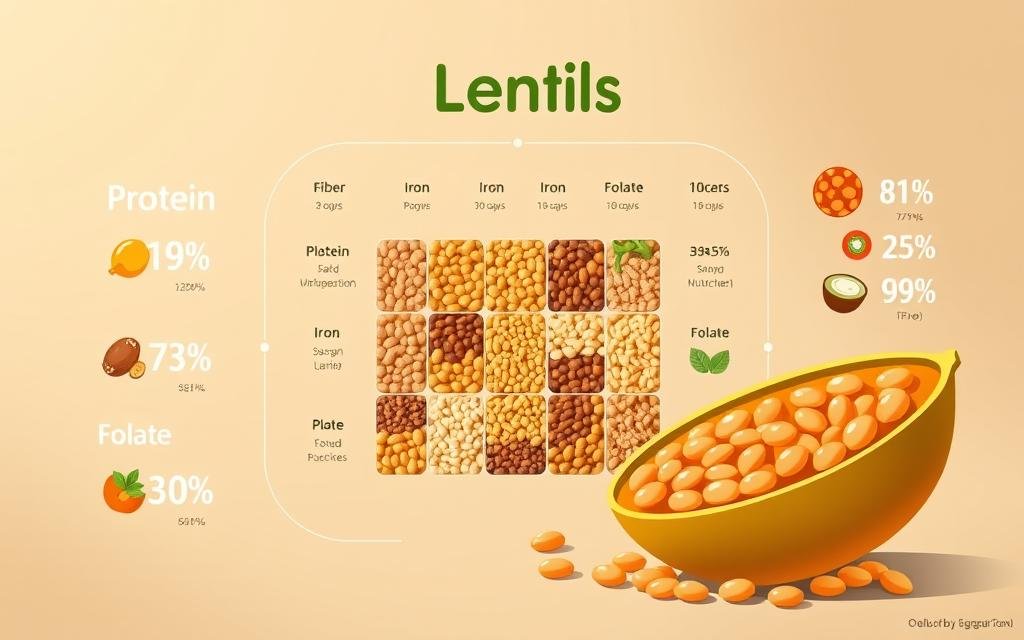
Lentils are packed with vital nutrients, including protein, fibre, and various micronutrients. They are particularly rich in folate, iron, and potassium. This makes them an excellent addition to a balanced diet.
These nutrients play a crucial role in maintaining overall health and well-being.
Fibre Content and Cardiovascular Benefits
The fibre content in lentils is noteworthy for its cardiovascular benefits. A high-fibre diet can help lower cholesterol levels. This reduces the risk of heart disease.
Lentils are an excellent way to increase your fibre intake. They support a healthy heart.
Plant Protein and Antioxidant Properties
Lentils are also a great source of plant-based protein and antioxidants. These components work together to protect against cell damage. They support overall health.
Incorporating lentils into your diet can provide a boost to your antioxidant intake. This contributes to a healthier you.
By understanding the nutritional profile of lentils, you can make informed choices. You can incorporate them into your diet for improved heart health and overall well-being.
How Lentils Reduce Heart-Disease Risk
Studies show that eating lentils can lower heart disease risk. They are full of nutrients, fibre, and antioxidants. These work together to protect your heart.
Clinical Research and Epidemiological Studies
Many studies have looked at lentils and heart health. They found that eating lentils often means lower heart disease rates. Clinical trials also show that lentils can improve heart health risk factors.
A big study combined several research findings. It found that eating legumes, like lentils, lowers heart disease risk. It stressed the importance of including legumes in a heart-healthy diet.
Cholesterol-Lowering Mechanisms
Lentils help lower cholesterol, a key heart disease risk factor. Their soluble fibre binds to bile acids and removes them. This reduces liver cholesterol production.
Impact on LDL vs HDL Cholesterol
The fibre in lentils is good for LDL cholesterol, or “bad” cholesterol. It helps lower LDL levels, reducing artery plaque buildup. Lentils may also boost HDL, or “good” cholesterol, improving heart health.
| Cholesterol Type | Effect of Lentils |
|---|---|
| LDL (Bad) Cholesterol | Reduced |
| HDL (Good) Cholesterol | Maintained or Increased |
Blood Pressure Regulation Effects
Lentils are good for blood pressure, another heart health factor. Their potassium helps balance sodium, lowering blood pressure. Eating lentils regularly can keep blood pressure healthy.
Anti-Inflammatory Properties
Lentils have anti-inflammatory properties, reducing body inflammation. This is a heart disease risk factor. Their antioxidants and polyphenols protect the heart.
Adding lentils to your diet supports heart health. With their nutrients and health benefits, lentils are great for a heart-healthy lifestyle.
Varieties of Lentils Available in Australia
Australia has a wide range of lentils, each with special health benefits. Whether you want more fibre or antioxidants, there’s a lentil for you.
Red Lentils: Nutritional Profile and Heart Benefits
Red lentils are loved for their nutrition and simple cooking. They’re full of protein, fibre, and minerals like iron and potassium. The fibre in red lentils can lower cholesterol, which helps your heart.
They have a mild taste and soft texture. This makes them great for many dishes.
Green and Brown Lentils: Fibre Champions
Green and brown lentils are packed with fibre. They’re good for your digestion. These lentils keep their shape when cooked, perfect for salads and stews.
They’re also full of antioxidants and nutrients. This helps your heart and may lower inflammation.
Black Beluga Lentils: Antioxidant Powerhouses
Black beluga lentils are small, shiny, and full of nutrients. They have lots of antioxidants, which protect cells and support heart health. Their strong flavour and firm texture are loved by chefs and home cooks.
They’re great in soups and salads.
Australian-Grown vs Imported Lentils
Australian-grown lentils are known for their quality and freshness. Buying local supports local farmers and cuts down on carbon emissions. But, imported lentils might offer more variety and be cheaper.
It’s up to you to decide based on freshness, sustainability, and cost.
Practical Ways to Include Lentils in Your Diet
Adding lentils to your meals can greatly improve your heart health. They are easy to use in many dishes, from soups to salads and curries. Lentils are both nutritious and versatile.
Quick and Easy Australian Lentil Recipes
Start with simple recipes like lentil soup or salad. These dishes are tasty and full of nutrients. For instance, a basic lentil soup involves sautéing onions and carrots, then adding lentils and broth.
Optimal Cooking Methods to Preserve Nutrients
Cooking lentils is simple. Just rinse them and boil in water or broth until tender. To keep nutrients, don’t overcook and use little water. A pressure cooker can also help cook them faster.
Recommended Daily Intake for Heart Health Benefits
Eating about 1/2 cup of cooked lentils daily is good for your heart. This amount boosts fibre, protein, and other nutrients that help your heart.
Potential Digestive Concerns and How to Address Them
Some might feel bloated or gassy from lentils. Start with small amounts and increase slowly. Drinking water and soaking lentils before cooking can also help.
| Lentil Type | Cooking Time | Nutritional Highlights |
|---|---|---|
| Red Lentils | 20-25 minutes | High in fibre, protein, and minerals |
| Green Lentils | 30-40 minutes | Rich in antioxidants and fibre |
| Black Beluga Lentils | 25-30 minutes | High in protein and antioxidants |
Conclusion: Embracing Lentils for Long-term Heart Health
Lentils are a nutritional powerhouse that can greatly help your heart health. Adding them to your diet is a commitment to your heart’s long-term wellness. Their nutritional profile and benefits make them perfect for a healthy heart.
Start your lentil journey today with some tasty and easy recipes. Lentils are versatile and packed with nutrients. They’re great for lowering cholesterol, managing blood pressure, or adding variety to your meals.
By making lentils a regular part of your diet, you’re taking a big step towards better heart health. So, get cooking and see the benefits of lentils for yourself! 🍲❤️